Share Dr. Reed E. Pyeritz's obituary with others.
Invite friends and family to read the obituary and add memories.
Stay updated
We'll notify you when service details or new memories are added.
You're now following this obituary
We'll email you when there are updates.
Select your format and elements to print

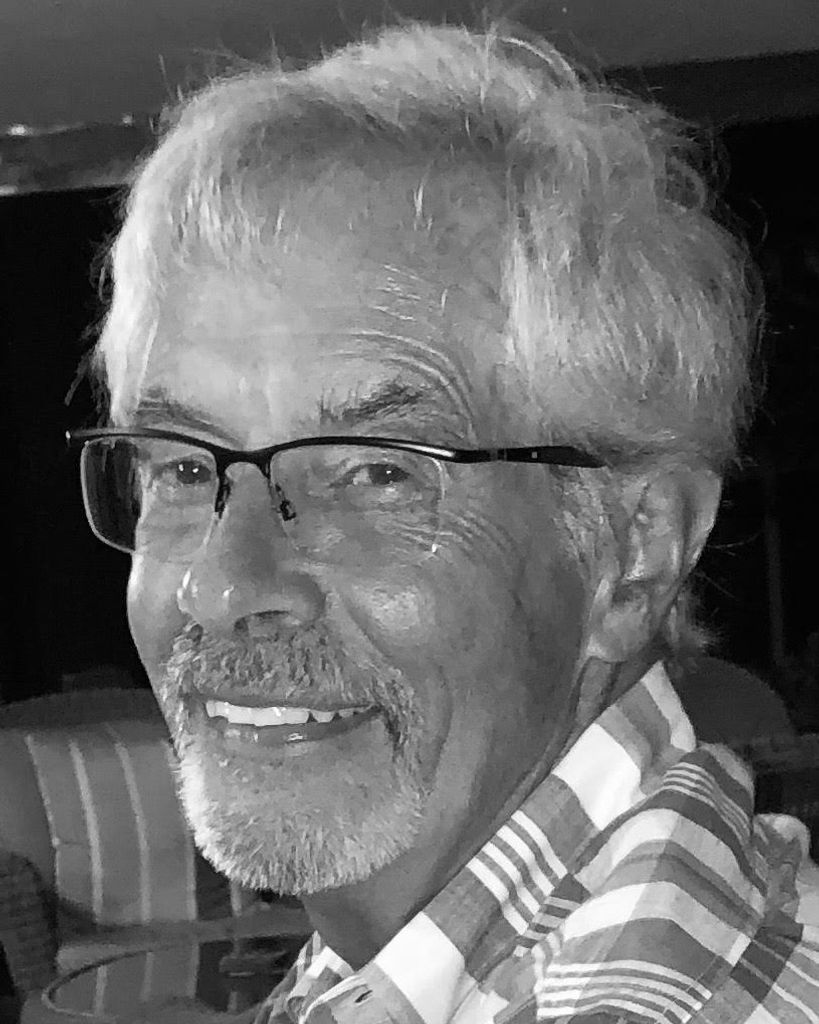
Dr. Reed E. Pyeritz
of Radnor, PA
Past Services
Memorial Service
Dr. Reed E. Pyeritz
Reed E. Pyeritz, MD, PhD, a pioneering medical geneticist whose work helped transform the diagnosis and treatment of Marfan Syndrome and other inherited cardiovascular disorders, died August 10, 2026, at age 78.
His greatest source of joy was his family. Reed met Jane Tumpson in first grade, and they later attended Mt. Lebanon High School together. They married and shared more than five decades of life. He is survived by Jane; their daughters, Allyson Colaco and Abigail Hopkins; son-in-law, Keith Hopkins; and grandchildren Penelope and Tallulah; sister-in-law, Linda Pyeritz. His younger brother, Eric “Rick” Allen Pyeritz, preceded him in death in 2025. Reed described Rick as “a good doctor, a better man, and the best of brothers”.
Reed was a devoted husband, father, grandfather, brother, uncle, and friend. He was also a physician, scientist, teacher, author, soldier, and endurance athlete. But for all that he accomplished, he measured a successful life less by titles or awards than by what one gives, what one learns, whom one loves, and what one leaves behind in others.
Born in Pittsburgh on November 2, 1947, and raised in Mt. Lebanon, Reed developed an early fascination with science. As a boy, inspired by the beginnings of the American space program, he built rockets in his backyard and once gave his father a list of chemicals to purchase from Fisher Scientific for his experiments. That combination of curiosity, imagination, and hands-on exploration never left him.
He graduated from Mt. Lebanon High School in 1965 and received an S.B. in Chemistry from the University of Delaware in 1968. He earned an A.M. and PhD in Biological Chemistry from Harvard University in 1972 and his MD from Harvard Medical School in 1975. He subsequently trained in internal medicine and medical genetics, at Johns Hopkins where he was recruited by genetics pioneer Dr. Victor McKusick. After a decade in Pittsburgh, Reed joined the University of Pennsylvania faculty in 2001, where he spent 20 years.
His life's work centered on helping people with inherited disease—particularly Marfan Syndrome, a genetic disorder that can cause life-threatening enlargement and dissection of the aorta. In 1979, while at Johns Hopkins, Reed organized a gathering of patients, families, and physicians affected by Marfan Syndrome. That small group eventually grew into the Marfan Foundation, an international organization supporting patients, families, education, advocacy, and research.
His research helped establish the role of the FBN1 gene in Marfan syndrome and contributed to advances in the medical and surgical management of the disease. The cumulative work of Reed and his colleagues helped dramatically improve life expectancy for people living with Marfan syndrome and related hereditary aortic disorders.
Reed was also a founder of the American College of Medical Genetics, serving as its second president, and held numerous leadership positions in academic medicine. His scholarship ultimately exceeded 700 publications, and he was a co-editor of Emery and Rimoin's Principles and Practice of Medical Genetics and Genomics. Among his many honors were the David L. Rimoin Lifetime Achievement Award in Medical Genetics and the Marfan Foundation Lifetime Achievement Award.
His final book, Uncertain Precision: Managing Health Care with Personalized Technologies, was published in 2026. Its title reflected a principle that had guided his career: uncertainty is not the enemy of science; it is what makes science necessary. Even near the end of his life, Reed remained engaged with unanswered questions and the future of medicine.
He brought that same appetite for life beyond the laboratory. He served as a Lieutenant Colonel in the U.S. Army Reserve Medical Corps, including during Operation Desert Storm. He ran 24 marathons, with a Boston Marathon best of 2:51; competed as a nationally ranked Masters triathlete; and participated in a Guinness World Record 100-man, 100-mile relay with the Baltimore Road Runners Club.
Reed believed that to live fully, you had to explore everything. He was intensely curious about the world, but never too busy to be curious about people. He valued evidence without losing his sense of wonder and embraced technology without surrendering his skepticism. He knew that progress and success are not driven by ego, and Reed achieved both through perseverance, intellect and humility.
He leaves behind an extraordinary scientific legacy, but an even more personal one: a family that loved him, patients whose lives were changed because of his work, students who learned from his example, colleagues who valued his friendship, and generations yet to come who will benefit from discoveries to which he contributed.
Reed spent his life pursuing what was not yet known.
He never stopped believing there was more to discover.
A celebration of his work and life will take place later this year.
Arrangements by Joseph Levine & Sons - www.levinefuneral.com
Past Services
Memorial Service
Sunday, August 16, 2026
Starts at 11:00 am (Eastern time)
Radnor Valley Country Club
Guestbook
Visits: 810
This site is protected by reCAPTCHA and the
Google Privacy Policy and Terms of Service apply.
Service map data © OpenStreetMap contributors